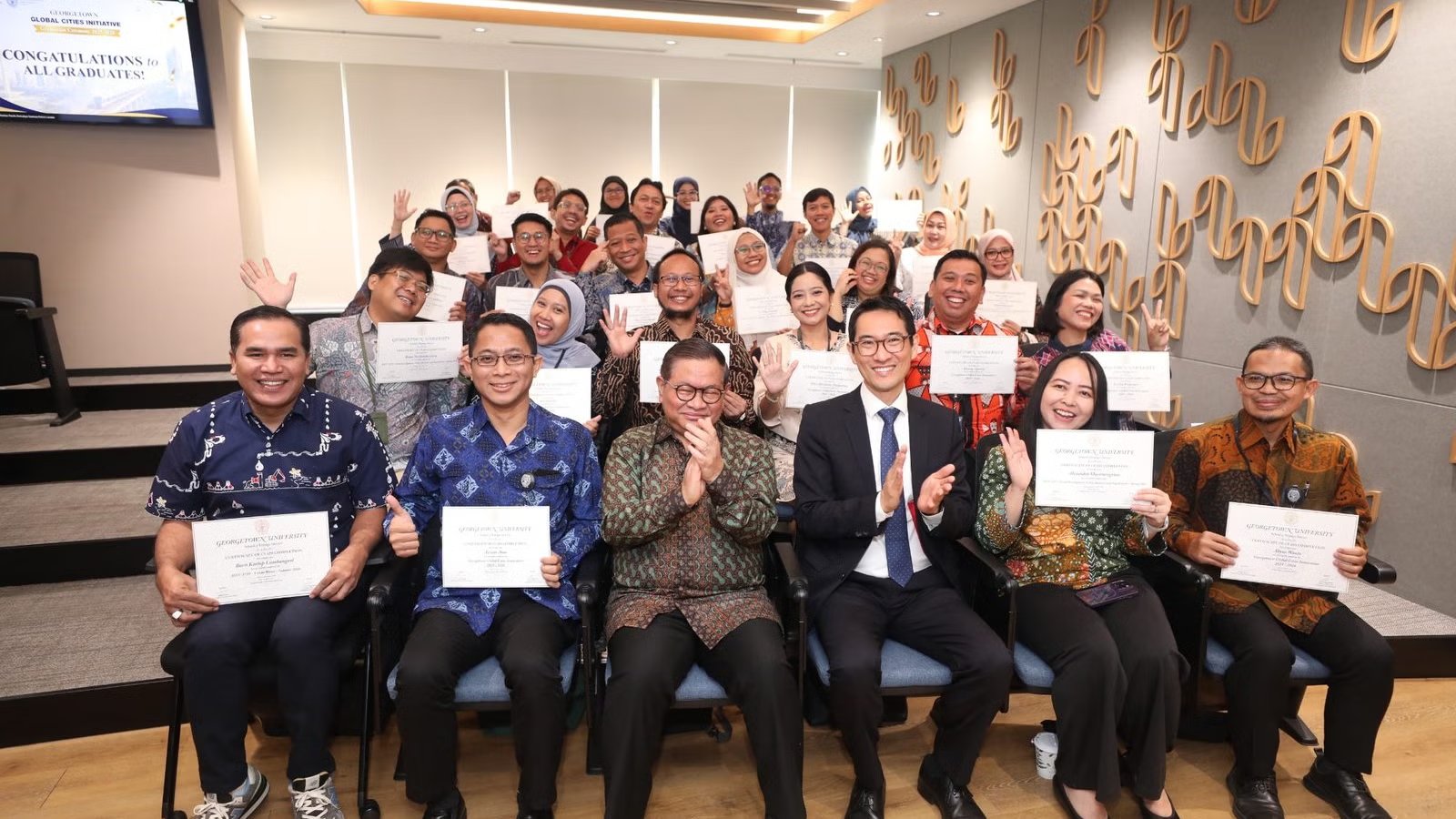
The ceremony recognized 30 civil servants from the Provincial Government of DKI Jakarta who successfully completed the program over two academic semesters. Through an interdisciplinary curriculum, the graduates strengthened their capacity to address complex urban challenges through evidence-based policymaking and cross-sector collaboration.
Designed and delivered by Georgetown SFS Asia Pacific, the program equips public sector leaders with the analytical tools and practical experience needed to navigate the increasingly interconnected challenges facing modern cities. Over the course of three semesters, the inaugural cohort completed a rigorous curriculum that included Livable Cities and Social Protection (Fall 2025), Local Development, Policy Analysis, and Negotiations (Spring 2026), and Urban Design and the Environment and Urban Water (Summer 2026). The academic experience was complemented by at least 10 field studies in Jakarta and Semarang, where participants applied classroom learning to real-world urban policy challenges.
Opening the ceremony, Prof. Yuhki Tajima, Ph.D., Founding Rector of Georgetown SFS Asia Pacific, emphasized the importance of investing in public leadership to shape the future of cities.
“Cities today face increasingly complex challenges that require leaders who can think across disciplines, collaborate across institutions, and make decisions grounded in evidence. Through this partnership with the Provincial Government of DKI Jakarta, Georgetown SFS Asia Pacific is proud to help prepare civil servants with the knowledge, analytical tools, and global perspective needed to shape Jakarta’s future as a world-class city,” Tajima said.
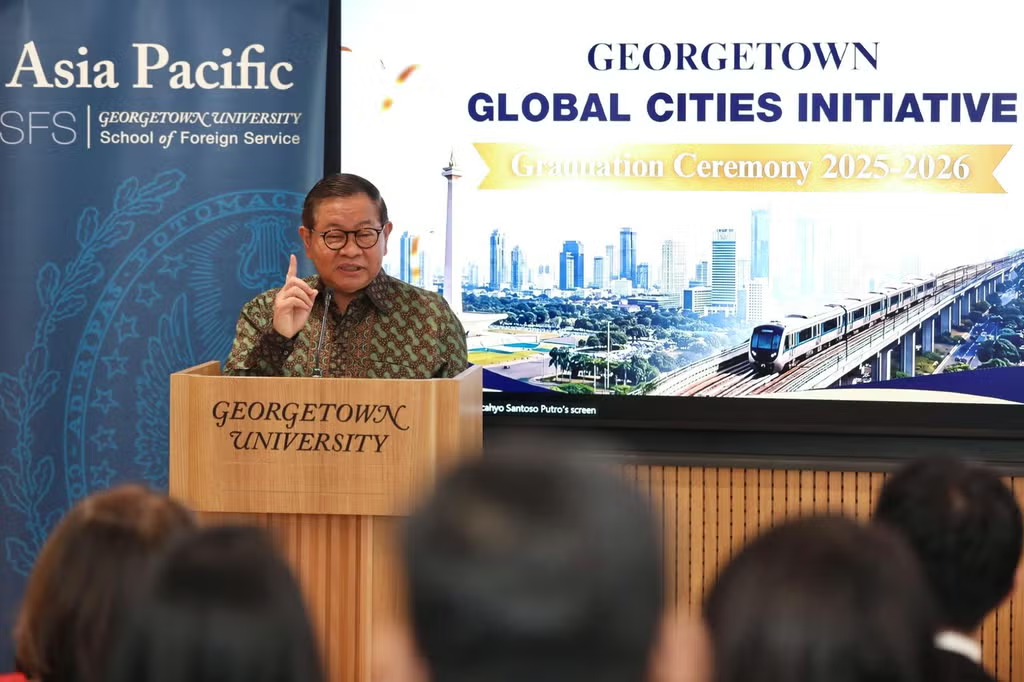
The graduation ceremony was attended by Gov. Pramono Anung, Governor of DKI Jakarta, who congratulated the graduates and encouraged them to translate their learning into meaningful public service.
“Jakarta’s transformation into a global city depends not only on infrastructure and investment, but also on the quality of its people. I hope the graduates of this program will become agents of change, bringing innovation, integrity, and evidence-based thinking into every policy they develop,” Governor Pramono said.
Governor Pramono also announced a special incentive for the inaugural cohort. Should Jakarta advance into the top 65 of leading global city rankings, the Provincial Government of DKI Jakarta will sponsor two graduates from the first cohort to participate in a study visit to Washington, D.C., providing them with an opportunity to gain international perspectives on urban governance and public policy.
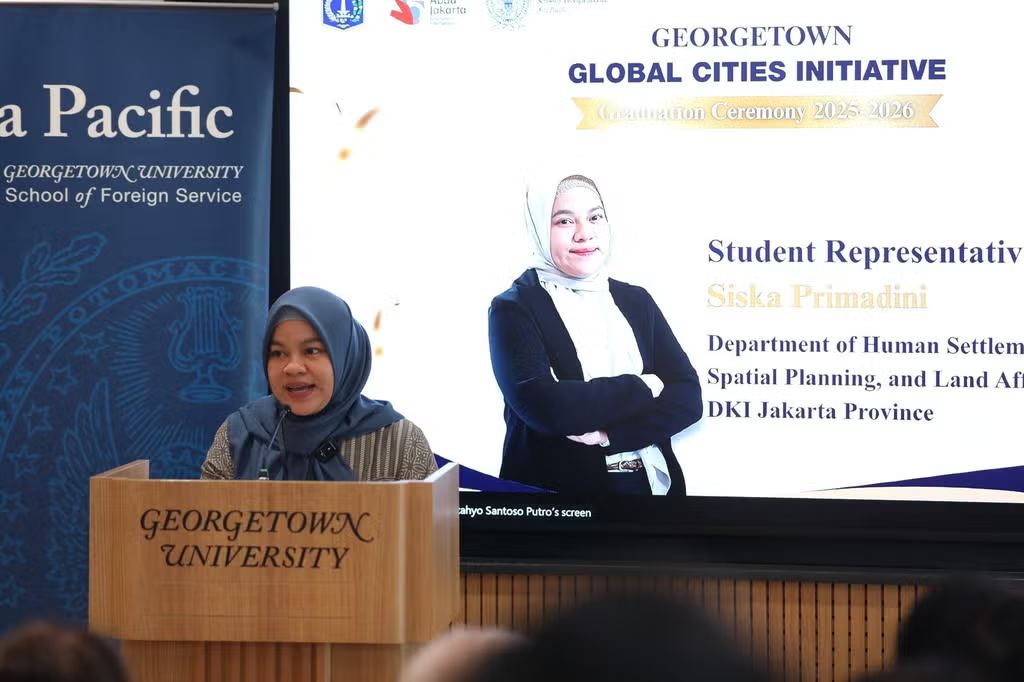
Also in attendance were Atika Nur Rahmania, Head of the Regional Development Planning Agency (Bappeda) of DKI Jakarta, Dyan Airlangga, Head of the Human Resources Development Agency (BPSDM) of DKI Jakarta, Prof. Wendy Haryanto, Director of the Urban Lab, and Prof. Scott Guggenheim, Director of Policy Labs at Georgetown SFS Asia Pacific, who supported the inaugural cohort throughout their learning journey.
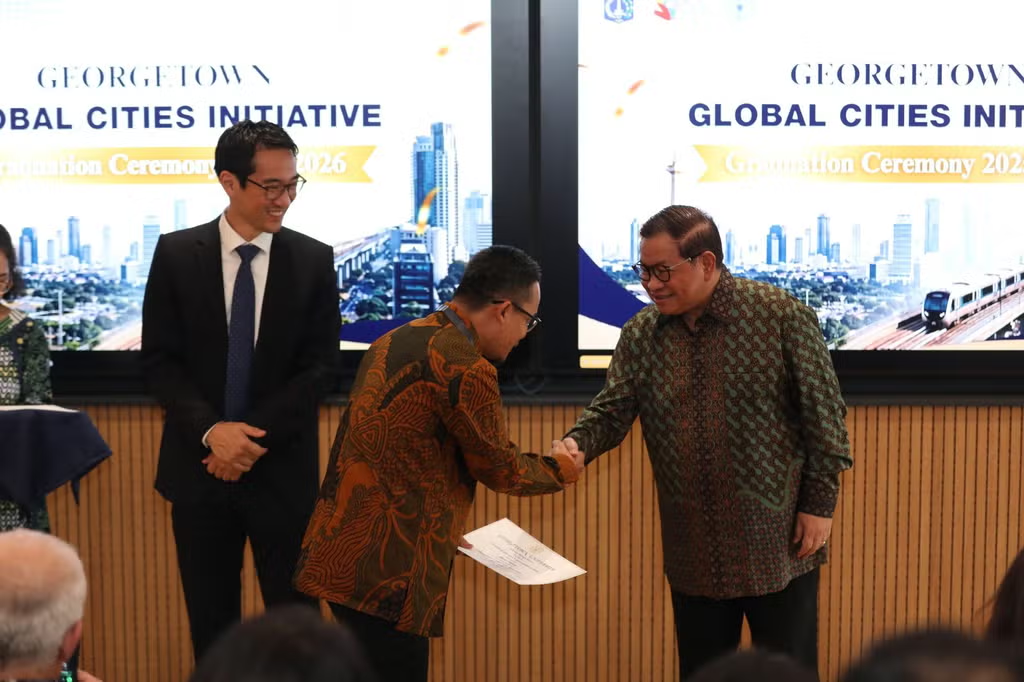
Reflecting on the graduates’ progress, Atika highlighted the transformation she witnessed throughout the program.
“Throughout the program, we saw the graduates grow not only in their technical expertise, but also in their ability to collaborate across sectors, think critically, and develop practical, evidence-based solutions to complex policy challenges. These are the capabilities that will help shape a more adaptive and responsive Jakarta,” Atika said.
The Global Cities Initiative Capacity Building Program reflects Georgetown SFS Asia Pacific’s commitment to preparing public sector leaders with the knowledge, global perspective, and practical skills needed to address the challenges of rapidly evolving cities. By combining academic rigor with experiential learning, the program empowers civil servants to develop innovative policies and strengthen public institutions in service of their communities. The program is part of a multi-year engagement with the Jakarta Provincial Government to strengthen its capacity to employ evidence and global practices to improve the policies of Jakarta, which has recently been declared by the United Nations as the largest city in the world.