Policy Labs
Applied policy engagement at Georgetown SFS Asia Pacific.
Policy Labs are our applied platform for developing knowledge and expertise on the urgent challenges of the Global South and Asia Pacific. Designed for both graduate and executive students, the labs integrate teaching and applied research to bridge global knowledge with regional policy practice.
Each Policy Lab is a faculty-led platform that combines rigorous, experiential courses with applied policy research of real-world relevance. Together, these elements create a dynamic environment in which students and faculty engage directly with the policy challenges shaping the Global South and Asia Pacific.
Quick facts: Policy Labs
Eligibility
- Students enrolled in a two-year SFS master’s degree
- Students in GSAP graduate programs
- Professionals in the Asia Pacific region
- Institutional partners
When offered
- Fall semester (September – December)
- Spring semester (January – May)
Duration
- One semester
- 14 weekly in-class sessions (1.5 hrs) + additional field site visits
Contact
DC Georgetown University students
Executive education and institutional partners
Policy Labs courses
In the Policy Labs, you will engage in dedicated thematic courses that teach you to translate global best practices into effective policy solutions for diverse regional contexts.
Fieldwork
A defining feature of each Policy Lab course is the central role of fieldwork, which goes beyond purely classroom-based learning by grappling directly with real-world complexity. This approach gives you a distinct advantage: to develop a deeper understanding of real-world constraints, gain expertise in generating new knowledge on pressing policy issues and produce policy ideas grounded in these realities.
Through this process, you emerge with the skills to drive—not just study—policy across contexts.
Course list
Virtually no issue today causes more controversy than the mining of critical minerals. This course takes a 360-degree look at the economic, technological, political, social and environmental issues surrounding mining and critical minerals development in Asia. Students will visit large and small mines, processing sites, activists and mine managers in Indonesia.
Gain hands-on understanding of coastal fisheries as ecological, economic and cultural systems. You will learn about the sustainability of coastal fisheries, the constraints of artisanal production, equity along the value chain and how to set priorities for effective intervention. Field trips include trips to points along the fishery supply chain from the habitat through optional snorkeling or scuba diving, appreciative inquiry with fisher communities, to large fishing ports and processing plants.
This course will review the overall logic of social protection systems and dive into the technical aspects. The class will also conduct field visits in Indonesia to see firsthand how what sounds good in theory does not always work well in practice. Guest lectures by social protection researchers and practitioners from the government, experts from UNICEF and around the globe will give students a 360-degree view of how social policy gets made and assessed.
Asia’s dynamic metropolis must reconcile the colonial legacies of the 19th and 20th centuries with the technical and planning challenges of the 21st century. This course walks students through the core principles of urban planning in Asia, covering urban policy, urban planning, transport economics, service provision and urban environmental management.
Community development is a bottom-up approach to development that centers voice, agency, and participation, particularly for the poor. The course explores how communities are complex, contested, and often constrained by inequality, risk and local power structures. Through case studies, applied exercises and field-based learning—including visits to villages—you will engage directly with community realities, gaining hands-on insight into how local knowledge can shape better development outcomes.
This course examines conflict, peacebuilding and post-conflict recovery through five core propositions. It challenges linear models of development, emphasizing that recovery follows multiple, context-specific pathways grounded in historical and field-based understanding. While macroeconomic approaches may be broadly agreed upon, most reconstruction challenges are complex, iterative problems requiring adaptive problem-solving rather than fixed solutions. The course highlights the importance of rebuilding state–citizen relationships beyond elite bargains, recognizing that lived experiences of conflict and recovery evolve across levels and over time. Ultimately, it shifts focus from prescribing reforms to understanding how to support and sustain reformers across society.
Enhance your understanding of global and regional trade and investment patterns, and the impact of geopolitics on them, from the perspective of the Asia-Pacific region. As a student, you will practice using analytical models of trade and investment agreements, understanding political economy trade-offs and drafting economic policy documents.
Applied policy research
Policy Labs are also engines of faculty-led applied research that advance policy in the Asia Pacific.
Through these research programs, the labs:
- Generate actionable policy insights
- Engage with public, private and multilateral stakeholders
- Contribute to ongoing policy debates and reforms across the region
By working with faculty, you will generate new knowledge that shapes policy conversations and outcomes in real time.
Policy Labs
Policy Labs are organized around a curated set of thematic areas that reflect the most pressing policy challenges across the Global South and Asia Pacific. Each lab serves as a platform for teaching, applied research and engagement on critical issues shaping the region.
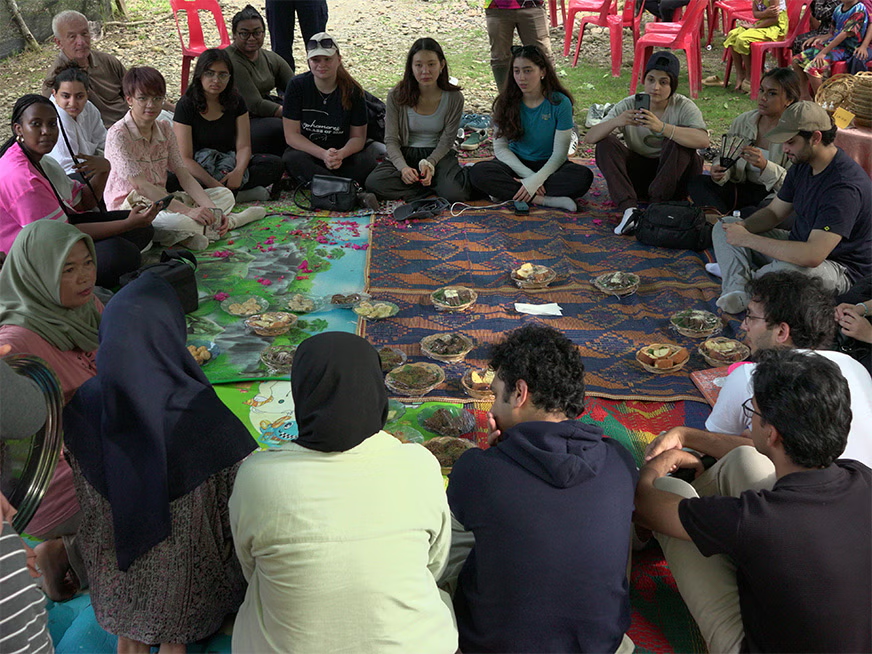
Poverty Lab
Inequality, social protection, community development
How can policies effectively reduce inequality and build resilient communities in rapidly changing economic and social environments?
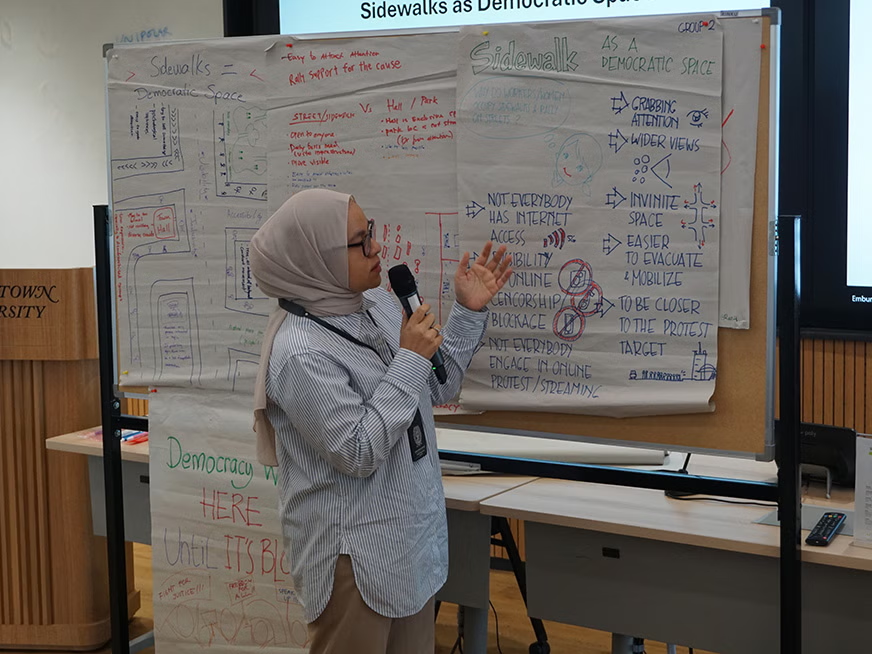
Urban Lab
Urban environment, arts and culture
How can cities in the Asia Pacific become more livable, inclusive, and sustainable while preserving cultural identity and supporting innovation?
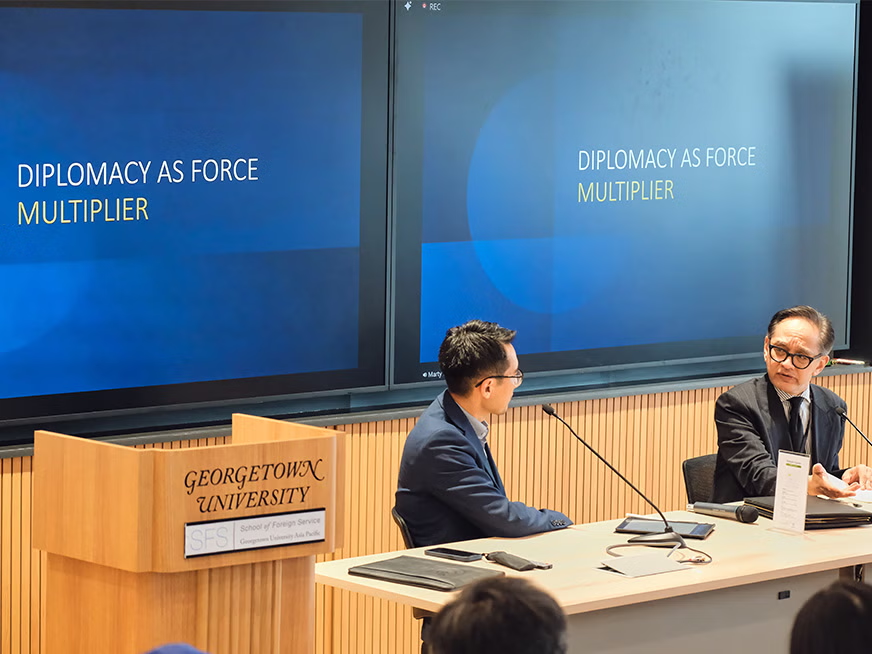
Politics Lab
Diplomacy, democracy, conflict, civil society
How do political institutions and actors shape policy outcomes, and how can governance systems adapt to conflict, democratic change and societal pressures?
Natural Resources Cluster
The Natural Resources Cluster brings together a set of interconnected labs focused on the governance and sustainability of natural systems. Together, these labs examine how resource management, environmental sustainability and economic development intersect across diverse contexts in the region.
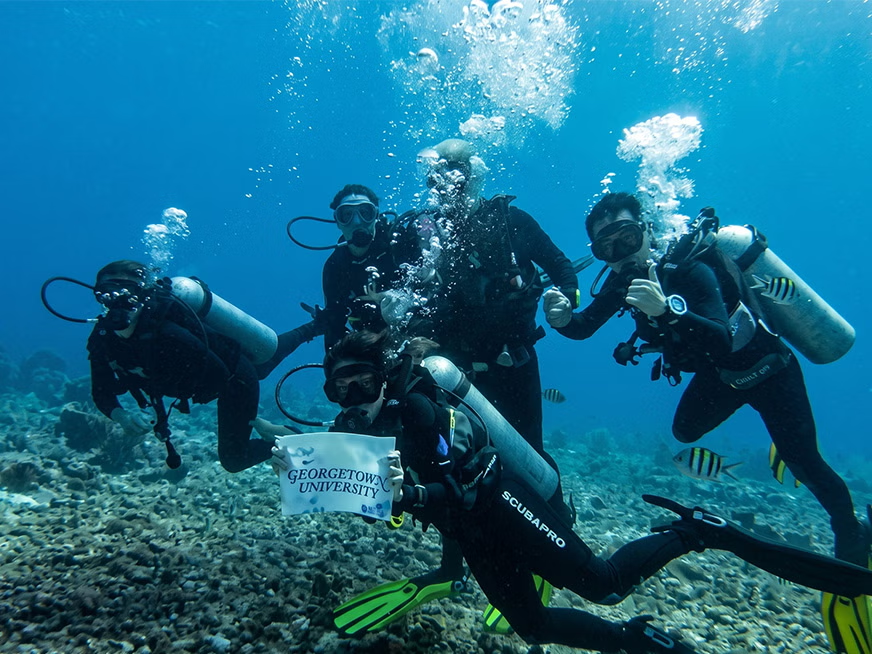
Blue Lab
Fisheries and ocean-related issues
How can coastal and marine resource governance balance livelihoods, sustainability, and economic growth in diverse Asia Pacific contexts?

Brown Lab
Mining and pollution
How can resource extraction and industrialization be governed to minimize environmental harm while supporting economic development?